Breaking on the Wheel
At the Musée du désert, a look back at a terrible punishment used to repress the Protestants of Languedoc.
Translation of the original French article. Proposed by AI, reviewed by the author.

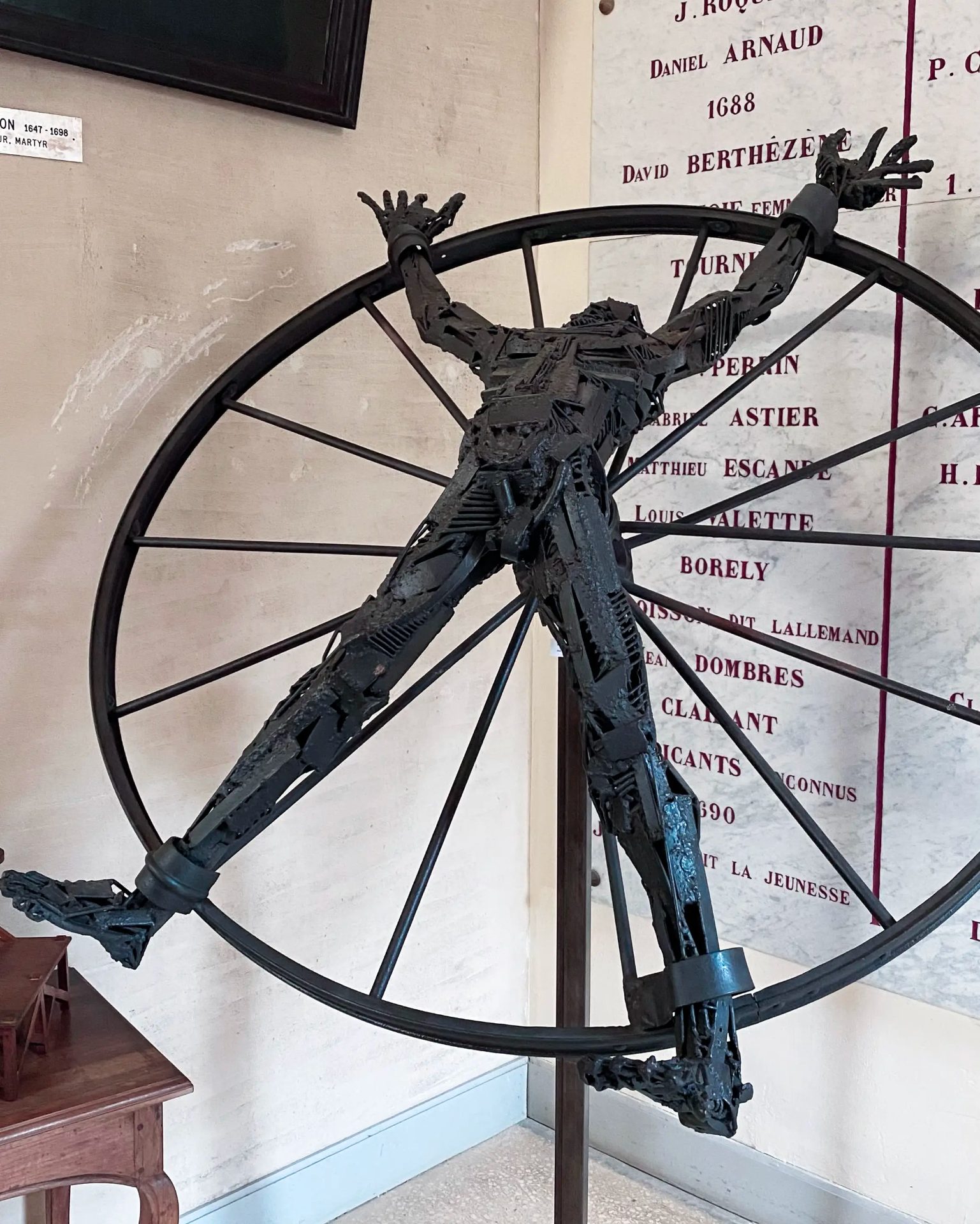
At the Musée du désert, a single image is enough to chill the blood: that of breaking on the wheel. Among the corporal punishments of the Ancien Régime, none matches its methodical cruelty. In the Gard and more broadly in Languedoc, it became one of the instruments of royal repression against Protestants, wielded during the uprisings linked to the revocation of the Edict of Nantes and then during the Camisard War.
A Two-Stage Ordeal
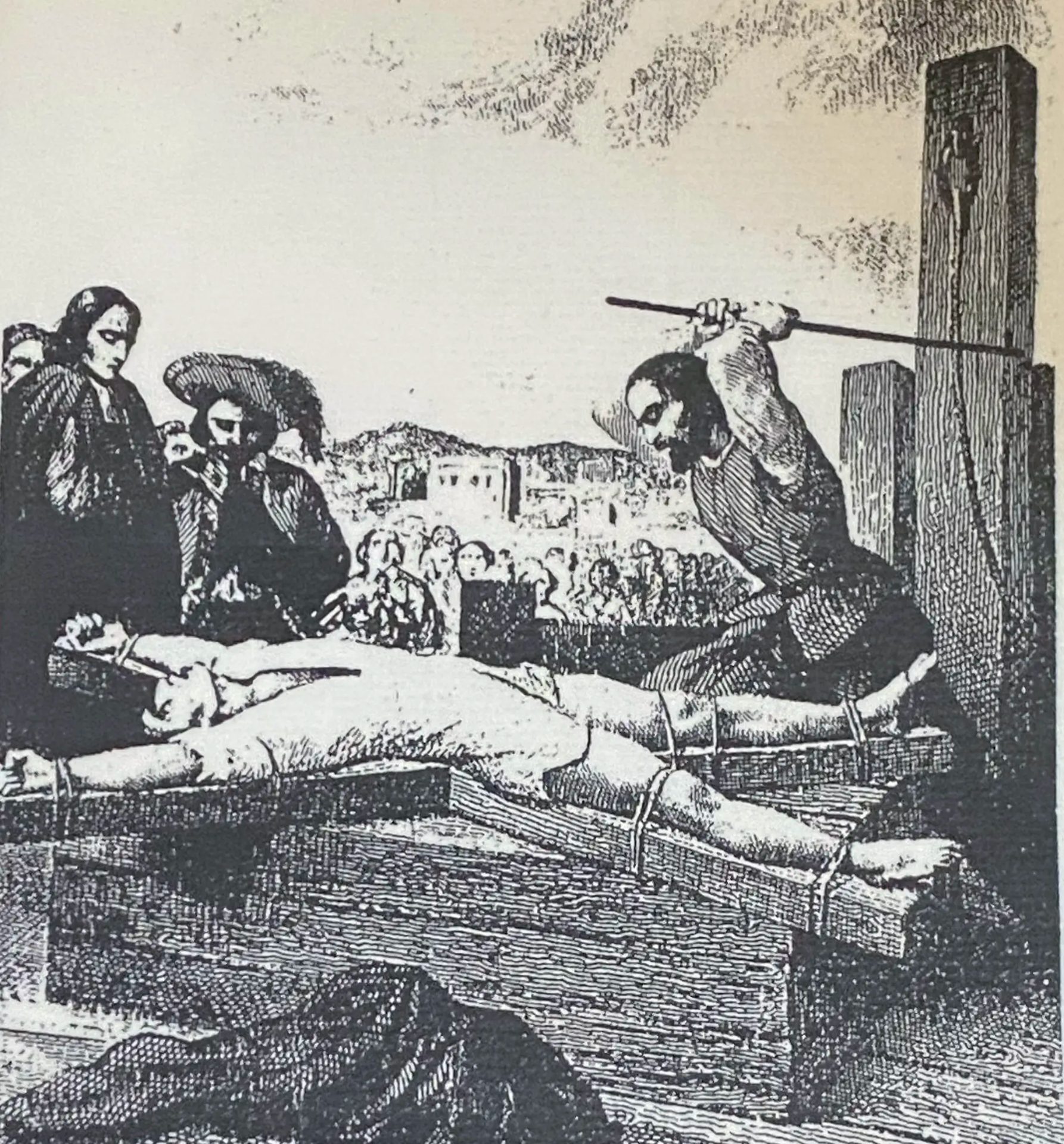
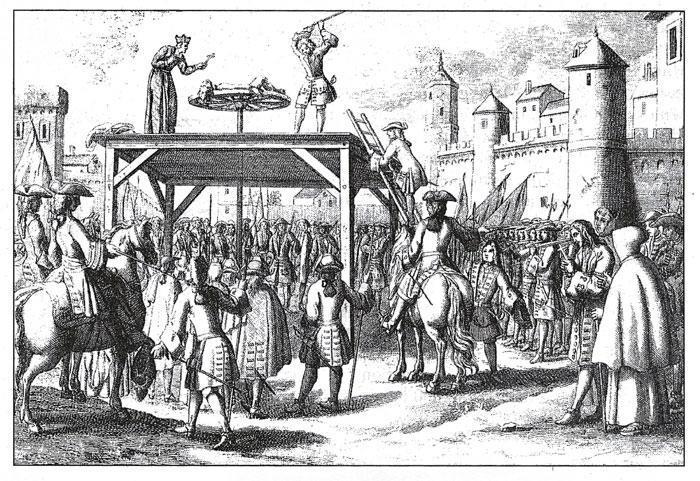
The ordeal unfolded in two acts. First, the shattering: limbs strapped to a horizontal cross, the executioner broke the condemned's bones one by one with an iron bar. Then the wait: hoisted onto the wheel, the victim lay dying there until their last breath. This staging of pain was not gratuitous — it aimed to leave a lasting mark on people's minds.
A Weapon of Repression Against Protestants
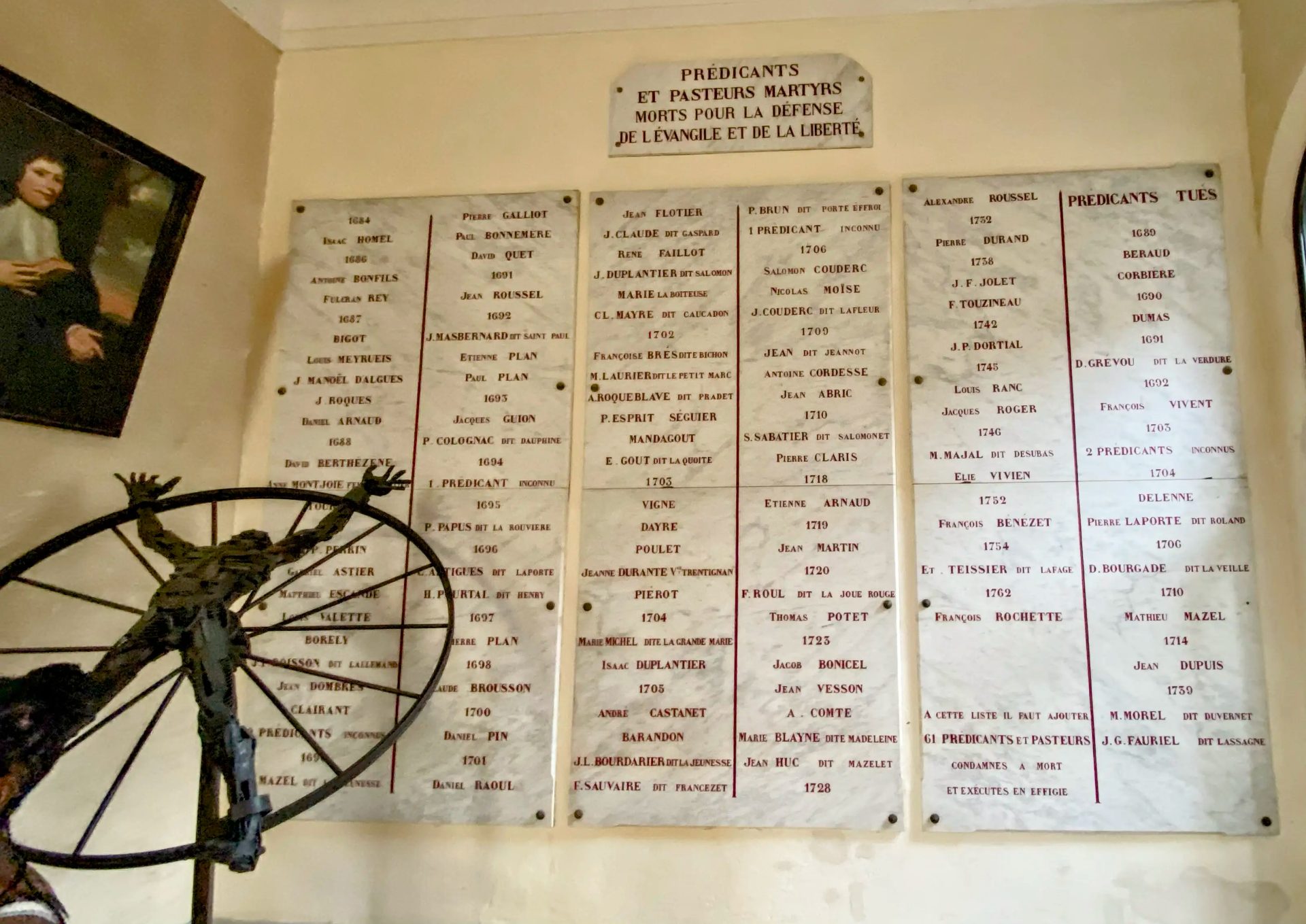
1685: the revocation of the Edict of Nantes marked a hardening of policy. Fines, seizure of property, forced billeting of soldiers, hostage-taking — the noose tightened around those who persisted in gathering clandestinely. Worse still: a retracted conversion was judged a capital crime. Women languished in prison — notably in the Tour de Constance — while men were sent to the wheel or to the galleys.
For the monarchy and the Church, going back on one's abjuration was never a simple matter of conscience: it was a betrayal of the State, plain apostasy. According to royal law, the oath of conversion bound the individual with no possible turning back.
Then came the Camisard War. Camisards against royal troops, at the turn of the 18th century — and Catholic abuses knew no more bounds. Executed without trial, most often hanged, sometimes broken on the wheel, sometimes burned alive, the Camisards paid a heavy price. The calculation was cold: to terrorize in order to deter any rebellion, any support for the cause.
A Practice Abolished Late
For two centuries, the wheel reigned over the crimes judged most odious — murders, banditry, and this religious resistance that authorities sought to extinguish. Introduced in the 16th century, it endured throughout the Ancien Régime without weakening. In metropolitan France, the Genevan soldier André Sauret may count among its last victims, on September 4, 1790.
Then came the Revolution, and with it, the break. Carried by the spirit of the Enlightenment, the Penal Code of 1791 swept away prolonged corporal punishments and imposed the guillotine — egalitarian, faster, seemingly less cruel — as the sole method of capital execution. The wheel, symbol of an arbitrary and spectacular justice, was finally removed from the French penal arsenal.
Introspection
What remains of this memory in Protestant hearts today? In Languedoc as elsewhere, the descendants of these persecuted communities still carry the memory of the Désert — that time when faith was lived in hiding, at the risk of one's life.
For many, this is not merely a historical legacy: it is an identity forged in resistance, a way of believing that learned to do without churches and priests, keeping only the essential.
Faced with such an outburst of violence, one can legitimately wonder: what would our own faith have been, amid such turmoil? Would we have held firm to the wheel, or given in under threat?
Protestants today, often free to believe or to doubt, measure the immense distance separating them from these forebears for whom religious conviction could cost one's life.
This memory calls for neither triumphalism nor resentment, but a clear-eyed gratitude — that of finally being able to choose, in peace, what others paid for with their blood.
David Herreman
Article written with the help of nTilia (https://ntilia.com)