Anointing Oil or Favor Oil: The Business That Exploits Faith
How false prophets turn a biblical symbol into a paid vial to extort vulnerable believers
Text assisted by artificial intelligence — reviewed by the author.
Translation of the original French article. Proposed by AI, reviewed by the author.
Synthesis of the article written with the help of AI, read by a synthetic voice. All episodes →
Chapters

Evangelical Fetishism: The Business of Anointing Oil (or Favor Oil) and the Commodification of the Sacred
You've probably already come across it, that little vial of oil handed to you as the solution to all your troubles. Within the movements of the New Apostolic Reformation (NAR) and certain revival churches with cult-like drift, a fraudulent practice has become structurally institutionalized, the commercialization of anointing oil or divine favor oil.
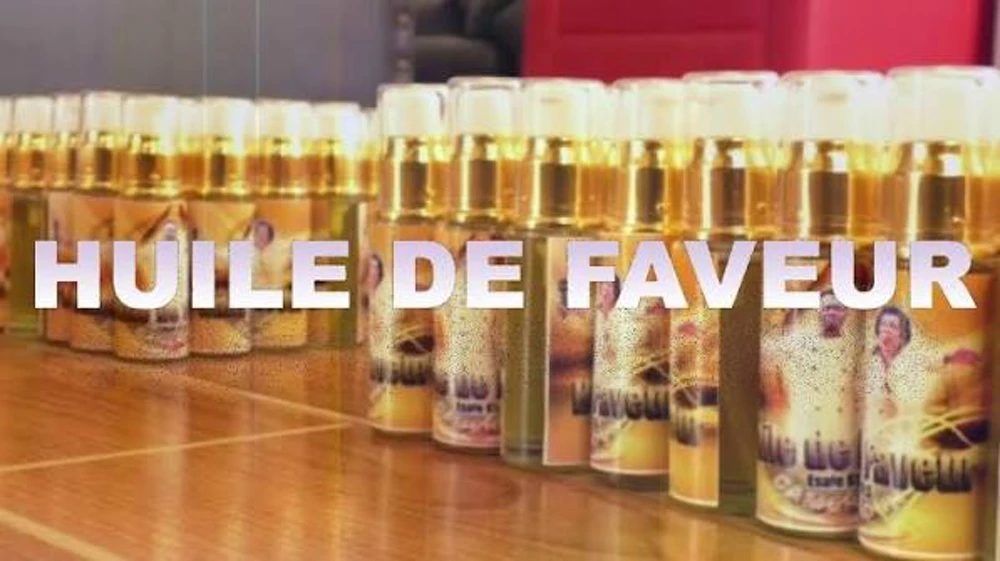
Presented by false prophets as an infallible material vector guaranteeing healing, deliverance or financial breakthrough, this sale of favor oil is not a mere folkloric drift.
Look closely at how it is accompanied by well-oiled marketing, with its staged miracle testimonies during live-streamed services, its priced "anointing levels" (simple oil, "double portion" oil, "fire" oil), and its sales campaigns organized around supposedly favorable prophetic dates. Some vials, presented as coming from Israel or "activated" by the leader's fasting, are sold at prices that can represent several days, even several weeks of wages for a modest believer.
Things must be called by their name. Factually and theologically, this is an absolute heresy and an extortion engineering targeting the deepest human distress. This system rests on three interlocking pillars, namely the diversion of Scripture to legitimize the object, the systematic monetization of the sacred, and the methodical exploitation of believers' vulnerability. It is precisely this triptych that we are going to dissect together.
1. Doctrinal Heresy: The Mutation of the Symbol into a Magic Talisman
To justify this trade in vials of divine favor oil, false apostles or false prophets systematically distort biblical texts, thereby operating a severe theological regression toward animism and magical thinking. Watch how they transform a spiritual symbol, oil, into a fetish object, reintroducing into Christianity the very mechanisms that Old Testament prophets never stopped denouncing, namely the belief that a material object can contain, capture or channel a supernatural power independently of God.
A rigorous exegesis of the New Testament demolishes this deception. In the Epistle of James (5:14), the injunction to anoint the sick with oil rests on a dual reality of Antiquity. Olive oil was the basic medicine of the time, an attested therapeutic function, as in the parable of the Good Samaritan in Luke 10:34, where the traveler pours "oil and wine" on the wounded man's injuries, and it accompanied the community's prayer, which constitutes the spiritual function. The Greek text is moreover unambiguous on this point, since it is the prayer of faith that saves the sick person, not the anointing in itself. At no point in the early Church was oil endowed with intrinsic power, let alone produced industrially, packaged in numbered vials or ranked into "levels" to be resold as a magic potion. The anointing was a free gesture, performed by the elders of the assembly, never a commercial transaction.
By attributing to the oil the direct power to cast out demons or trigger miracles, the sectarian leader subtly but radically shifts your faith. Your trust is no longer placed in divine sovereignty, but in the material object sold by the guru, and by extension in the guru himself, presented as the only channel capable of "activating" this favor oil. This effectively establishes an idolatrous practice, where the object becomes an amulet, and where the living relationship with God is replaced by a mechanical dependence on a product and its supplier.
2. The Crime of Simony and the Corruption of Souls
Look closely at what is darkest in this practice. It lies in its economic model, which resembles the classic definition of simony, the desire to buy or sell spiritual goods. The term itself is drawn from the founding episode recounted in Scripture, and it designates in Christian tradition one of the most serious offenses against the holiness of the divine gift.
The Book of Acts (8:18-20) describes to you with relentless clarity the case of Simon the Magician, who, having seen that the Holy Spirit was communicated through the laying on of the apostles' hands, offered them money to obtain this same power. The apostle Peter's response falls like an irrevocable condemnation, "May your silver perish with you, because you thought you could obtain the gift of God with money!". This sentence establishes a non-negotiable principle, namely that what belongs to divine grace is by nature non-transferable, unseizable and free. The gift of God cannot be subject to any pricing, on pain of losing its very nature.
Observe these systems closely today, and you will see an identical modus operandi, barely updated by the tools of modern marketing. Whether it involves self-proclaimed leaders in the West or charismatic figures operating on the African continent, the pattern is universal, divine grace is monetized there. Deliverance from a burden, the lifting of an alleged curse or the healing of a deadly disease is made conditional on the purchase of a vial of "favor" oil whose price is often prohibitive and disconnected from any economic reality, a fee you are required to pay before even receiving the object, the "blessing" being presented as proportional to the amount paid. This is no longer a ministry, it is a spiritual franchise exploiting misery, where every sacred gesture is indexed to a price list and where salvation turns into a consumer product to be renewed.
3. The Systemic Extortion of the Most Vulnerable
Notice how this organized racket targets with surgical precision the most vulnerable individuals. The sale of anointing oil (favor oil, or "blessed" water, "prophetic" handkerchiefs, bracelets or "deliverance soaps") thrives where health systems are failing or unaffordable, and where economic precarity is endemic. This is no coincidence, because these products spread massively in contexts where access to a doctor is a luxury, where structural unemployment deprives families of any safety net, and where the weight of traditional beliefs makes credible the idea that misfortune can have a supernatural origin. Distress thus becomes the ideal breeding ground for a trade that would have no traction on a population secure both materially and medically.
You can clearly see how the despair of a mother facing a sick child, the anguish of an unemployed father, or the panic of a woman awaiting a medical diagnosis, are cynically converted into revenue. The mechanism is devastatingly effective, because it relies on a two-step manipulation. The false prophet first creates the need through terror, diagnosing a family curse, a "spirit" of poverty, witchcraft plotted by a relative or an invisible spiritual blockage, then he immediately sells the exclusive material antidote, allegedly the only thing capable of neutralizing the threat he himself has just fabricated. It is a tax on suffering, levied at the precise moment when the victim is least able to think clearly. The money that could have paid for real medical care, financed a child's schooling or fed a family ends up in the pockets of a leader who enriches himself directly from his congregation's distress, often openly displaying the outward signs of his wealth, luxury cars, private jets, sumptuous residences, presented as tangible proof of the anointing he monetizes.
4. Clinical Collapse and the Return to Reality
The psychological and physical consequences of this fraud are often disastrous, and sometimes irreversible. You see believers, convinced by the leader's rhetoric, abandon their medical treatments, interrupt an antiretroviral triple therapy, stop a treatment for diabetes or hypertension, refuse chemotherapy or insulin therapy, to rely exclusively on applying the favor oil and the promise of a supernatural healing. This therapeutic renunciation, encouraged or even demanded as "proof of faith," turns a treatable condition into a death sentence. And when the disease progresses inexorably, as it always does, the sectarian system activates its usual defense mechanism, that of guilt inversion. Never will the product or the prophet be blamed. It is always the sick person who pays the price, for not having had enough faith, for having "doubted," for having kept a hidden sin, or for not having given a sufficient offering. Notice how the victim ends up doubly burdened, responsible first for their illness, then for the failure of the remedy sold to them. This perverse reversal protects the imposture from any refutation, since no failure can any longer be attributed to the system. It is, by construction, unfalsifiable.
Freeing yourself from this grip requires cold rationality and a lucid return to the facts. Divine intervention cannot be bottled, it has no barcode, it does not come in "anointing levels" and cannot be bought at the church store. To discern the imposture, ask yourself the right questions. Why would God's grace have a price? Why does the "channel" of this power grow richer while his followers grow poorer? Why would the spiritual remedy require abandoning medical care, when nothing in Scripture opposes prayer to medicine? Refusing to buy this favor oil means refusing to fund your own manipulation, it means ceasing to feed a system that thrives on fear. It is the fundamental act by which you reject the corruption of souls to reclaim the very essence of your faith, a grace which, by definition, is free, unmerited and gratuitous. "Freely you have received, freely give" (Matthew 10:8).
Sources and References
Theology and Biblical Exegesis
- The Simony of the Prosperity Gospel (Studies on New Testament ethics): Academic analyses demonstrating how the commodification of prayer and "anointed" objects falls under the strict condemnation of simony (Acts 8), violating the mandate of gratuitousness imposed by Christ (Matthew 10:8).
- Exegetical commentaries on James 5:14: Demonstrate the historical theological consensus according to which the oil mentioned by the apostle was the medical agent of the time, used in synergy with prayer, and never constituted a talisman with magical properties.
Religious Sociology and Charismatic Drifts
- African Initiated Churches and the Prosperity Gospel (Works of African religious sociology): Studies documenting the proliferation of false prophets in Central and West Africa. This research exposes how traditional animist beliefs (fetishism, talismans) have been recycled under a Christian charismatic vocabulary to justify the sale of oils and protective objects.
- The Subtle Power of Spiritual Abuse (David Johnson & Jeff VanVonderen): This clinical book explains the mechanics of pastoral power abuse, detailing how toxic leaders position themselves as the sole holders of the solution (via their objects or their exclusive anointing) in order to financially extort members kept in dependence and fear.
Frequently Asked Questions
What is the favor oil or anointing oil sold by certain preachers?
It is a vial of oil marketed by false prophets, presented as an infallible material vector guaranteeing healing, deliverance or financial breakthrough. This practice has become institutionalized within certain movements of the New Apostolic Reformation (NAR) and revival churches with cult-like drift.
What does the Bible really say about the anointing with oil in the Epistle of James?
In James 5:14, olive oil was the basic medicine of Antiquity and accompanied the community's prayer. The Greek text specifies that it is the prayer of faith that saves the sick person, not the anointing in itself; the oil never had intrinsic power in the early Church.
Why is this practice called simony?
Simony refers to the desire to buy or sell spiritual goods. The term comes from the episode of Simon the Magician in the Acts of the Apostles (8:18-20), to whom Peter replies: "May your silver perish with you, because you thought you could obtain the gift of God with money!"
Who are the people targeted by the sale of these products?
This trade targets the most vulnerable individuals and thrives where health systems are failing or unaffordable and where economic precarity is endemic. The despair of sick, unemployed, or diagnosis-awaiting people is converted into revenue.
How does the manipulation mechanism used by these false prophets work?
The mechanism relies on a two-step manipulation: the false prophet first creates the need through terror, diagnosing a curse or a spiritual blockage, then he immediately sells the exclusive material antidote supposed to neutralize the threat he himself has just fabricated.
What are the medical consequences of this fraud?
Convinced by the leader, believers abandon their medical treatments, such as antiretroviral triple therapy, treatment for diabetes or hypertension, chemotherapy or insulin therapy, to rely on the oil. This therapeutic renunciation turns a treatable condition into a death sentence.
What happens when the promised healing does not come?
The sectarian system activates guilt inversion: neither the product nor the prophet is ever blamed. It is always the sick person who pays the price, accused of not having had enough faith, of having doubted, of having kept a hidden sin, or of not having given a sufficient offering. The system is thus rendered unfalsifiable.
How can one discern and free themselves from this imposture?
One must ask the right questions: why would God's grace have a price, why does the "channel" grow richer while his followers grow poorer, why would the remedy require abandoning medical care? Refusing to buy this oil means refusing to fund one's own manipulation, according to the principle: "Freely you have received, freely give" (Matthew 10:8).
Au Cœur du Silence. (2026). Anointing Oil or Favor Oil: The Business That Exploits Faith. Au coeur du Silence. https://ntilia.com/u/silence/en/anointing-oil-or-favor-oil-the-business-that-exploits-faith (consulté le 2026-10-18)